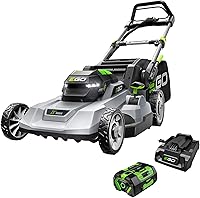
7 Best Walk-Behind Mower for Steep Hills (November 2026)
The best walk-behind mowers for steep hills include the YARDMAX YL2250 for brush and fence lines, the Greenworks 60V 21in Self-Propelled (best overall for slopes), and the EGO Power+ 21in Self-Propelled for long runs on a charge.
On this page (8 sections)
The best walk behind mower for steep hills is the Greenworks 60V 21in Self-Propelled, because rear-wheel drive pulls it up the grade while you steer and keep your balance. The YARDMAX tops our list on score for tall brush and fence lines, and the EGO is the pick when a big slope must be finished on one charge.
Every mower here solves some part of the slope problem: traction, weight, wheel size or the kind of growth you are cutting. Match the pick to your hill before you compare extra features.
Our picks at a glance
-
1

-
2

-
3

- 4
 Check it
Earthquake Walk Behind String Mower 160cc
Best for overgrown banks - 5
 Check it
Earthquake Walk-Behind String Mower
Best for weed-heavy slopes - 6
 Best for small, gentle slopesCheck it
- 7
 Best for grip on uneven groundCheck it
The best walk-behind mowers for steep yards
The best walk behind mower for steep hills earns it with drive and grip, not with a bigger engine alone. These seven cover the slope jobs most readers face, from a mild rise behind the house to a wild bank that no blade can touch.
Each write-up below states who the machine suits, what its specs mean in daily use, and where it gives ground to the others.
YARDMAX YL2250: Best for brush and fence lines
- 22 in cutting width
- 170cc gas engine
- Five cutting heights from 1.5 to 3.5 in
- 14 in ball bearing wheels
A string trimmer mower that cuts tall grass and weeds along fences, barns and rough banks where a rotary blade would stall.
Pros
- Offset head trims along fence lines
- 14 in wheels roll over rough ground
- Onboard trimmer string storage
Cons
- Not a finish-cut lawn mower
- Manual push only
YARDMAX suits the rough edges of a sloped property: fence lines, barn walls, banks and brush that a rotary deck would choke on. Its offset string head trims right along a boundary without you stepping in and out.
The 14 in ball bearing wheels travel over bumpy, uneven ground, and the one-piece smooth deck reduces vibration on rough terrain. Five cutting heights from 1.5 to 3.5 in let you set the head for tall weeds or a lighter trim.
A 170cc gas engine gives the power for a big job, and the onboard Cord Caddy keeps pre-cut string ready. The tool-free height change saves time when the growth varies across the bank.
At 61.7 lb it is light enough to steer by hand across a slope, though the head sits low and you still supply all the forward effort.
The trade-off against the self-propelled picks is push-only effort. Use it as a brush tool alongside a drive mower, not as the finish cut for a lawn.
For a full walk-behind shortlist, see our walk behind lawn mower picks.
Greenworks 60V 21in Self-Propelled: Best overall for slopes
- Rear-wheel drive self-propel
- Two 4.0Ah batteries
- 7 cutting heights from 1 to 4 in
- Up to 3/4 acre per charge
Rear-wheel traction and adjustable pace handle slopes without the hard pushing a plain mower needs on a climb.
Pros
- Rear-wheel drive grips on inclines
- Adjustable self-propel speed
- Four mowing modes
Cons
- Runtime drops on thick grass
- Heavier than a basic push model
Greenworks is our overall pick because rear-wheel drive does the climbing. On a slope the driven wheels sit under the deck and motor, so traction holds where a push mower would slip.
Adjustable self-propel pace lets you slow down on the steepest part and speed up on the flat. The two 4.0Ah batteries and brushless motor give gas-like power, with up to 3/4 acre per charge before terrain and technique change the figure.
Seven heights from 1 to 4 in cover most lawn lengths, and the 4-in-1 system mulches, bags, side discharges or picks up leaves. LED lights help with a dawn or dusk cut, and the 20.28 in deck stays nimble enough for beds and trees near the grade.
Skip it if your yard is all brush, since a string head is the better tool there. As a slope mower for a real lawn, it is the strongest all-round choice here, and the closest match in our gas push mower roundup shows what the cordless version replaces.
EGO Power+ 21in Self-Propelled: Best for long runs on a charge
- Up to 100 minutes of runtime
- Variable speed from 0.9 to 3.1 mph
- 8 cutting heights from 1.5 to 4 in
- Touch drive self-propel
A palm-controlled drive and a wide speed dial let you match pace to the grade, with long runtime from two 6.0Ah batteries.
Pros
- Up to 100 minutes per charge
- Palm-engaged variable speed
- Three lower blades for different jobs
Cons
- Heaviest pick here
- Premium price tier
EGO suits the homeowner with a long slope and a full lawn to finish. Two 6.0Ah batteries deliver up to 100 minutes of runtime, so one charge often covers the whole job even with the climb penalty.
Touch drive engages the self-propel with palm pressure, and the speed dial sits at your fingertips for changes between 0.9 and 3.1 mph. Set a slow pace going up, then open it out on the level stretch.
The 7.0 ft-lbs of cutting torque means thick grass on the bank does not bog the blade down.
The Select Cut system uses interchangeable lower blades for mulching, high-lift bagging or extended runtime, with the upper blade doing the main cut. Eight height positions from 1.5 to 4 in let you follow a slope's changing grass, and a two-bushel bag catches clippings on the way down.
Its trade-off is weight: 96 lb is the heaviest mower on this list, which matters when you load it or turn at the top. The drive covers that load on the hill itself.
PowerSmart shoppers comparing brands can read is PowerSmart a good lawn mower before settling on a value pick.
Earthquake Walk Behind String Mower 160cc: Best for overgrown banks
- 160cc Viper engine
- 22 in cutting diameter
- 14 in never-go-flat wheels
- Grab-N-Go engagement bail
Wide airless wheels and a string head clear tall growth on slopes a blade mower cannot handle, with a 5-year warranty.
Pros
- 14 in airless wheels float over rough ground
- Pause the head without stopping the engine
- Long steel deck reaches under fences
Cons
- Leaves a rough cut
- Gas engine needs fuel and upkeep
Earthquake suits a bank that has gone wild, where grass has given way to weeds, saplings and tall stems. A 160cc Viper 4-cycle engine starts on the first pull and powers through growth a handheld trimmer cannot reach.
The Grab-N-Go bail is the useful detail on a slope. Release it to stop the head while you clear a branch or rock, then re-engage without restarting the engine.
That saves a walk back down to the machine.
Extra-wide 2.5 in x 14.5 in airless wheels float over any terrain and give a stable base for a hillside path. The adjustable handlebar fits the operator, and the one-piece steel deck reaches under fences and low limbs.
An oversized debris deflector throws clippings away from your legs and boots.
Cutting height runs from 1.5 to 3 in with 0.155 line, and a 5-year warranty backs the frame. The 70 lb weight is a handful on a steep push, so plan your passes downhill where you can.
The trade-off is a rough cut with nothing like a lawn finish. Keep it for the wild sections.
Earthquake Walk-Behind String Mower: Best for weed-heavy slopes
- Hurricane cutting head
- 160cc Viper engine
- Cutting height from 1 to 4 in
- Extra-wide 14.5 in airless wheels
The Hurricane head has no catch points for weeds, so thick growth on a bank clears without constant stops to unwind line.
Pros
- Head resists weed wrap
- Line size switches for light or tough work
- Tool-free height changes
Cons
- Still a string cut, not a lawn finish
- Needs room to store
The Hurricane head is why this Earthquake pick suits weed-heavy slopes. Its design removes catch points, so stems and long grass do not wrap the head and force stops.
That matters on a bank where you cannot easily step back to clear it.
Line choice is flexible: load 0.095 line for light trimming or step up to 0.155 for tough growth. Height adjusts from 1 to 4 in without tools, so a quick change handles a patch of dense brush mid-cut.
The same 160cc Viper engine and 14.5 in airless wheels as the other Earthquake keep it balanced on uneven ground. The folding handlebar drops the machine to fit in a truck bed or under a bench.
At 70 lb it needs a firm hand on the steepest stretch, so keep the engine pulling and your pace steady.
Between the two Earthquake models, this one wins for the worst growth and the other for simpler, longer cuts. Neither is a lawn mower.
Both are the tool you use before the mower goes on the slope.
Greenworks 25322 40V 16-Inch: Best for small, gentle slopes
- 16 in cut width
- 4.0Ah battery
- 5 height positions from 1.25 to 3.75 in
- 37.5 lb weight
A light push mower for a small yard with a mild grade, easy to carry and store between cuts.
Pros
- Light at 37.5 lb
- Cuts up to 1/3 acre on a charge
- Shares batteries with other 40V tools
Cons
- No self-propel
- Narrow 16 in deck
Greenworks 25322 suits a small yard with a mild rise, not a true hill. At 37.5 lb it is light enough to carry up steps or lift over a retaining wall, and the 16 in deck fits between beds and hedges.
A 4.0Ah battery cuts up to 1/3 acre on a charge before grass condition and technique change the number, so it fits a compact front or back lawn. Five single-lever height positions run from 1.25 to 3.75 in.
The 35 minute average battery life sets a realistic session length for a small lot.
The 2-in-1 system mulches or rear bags, and the battery works with 75+ Greenworks 40V tools. That shared platform is a real saving if you already own a trimmer or blower.
The plastic deck keeps the weight down and shrugs off damp grass.
There is no self-propel, so a steep grade is where this pick stops making sense. Choose it for small and flat ground, or a slight slope you can walk easily with a light machine.
SENIX 21in 144cc Gas Push: Best for grip on uneven ground
- 144cc gas engine
- 8 in front and 11 in rear wheels
- 6 heights from 1.25 to 3.75 in
- 21 in deck
High rear wheels and a light gas deck give traction and stability on rugged, sloping ground at a modest weight.
Pros
- High rear wheels improve traction
- Light 45 lb gas mower
- 2-year warranty
Cons
- Push only, no drive
SENIX suits uneven, sloping ground where grip matters more than a drive. High wheels do the work here: an 8 in front and 11 in rear setup improves traction and stability on rugged terrain, according to SENIX, and it rolls over dips a small-wheel deck would catch on.
The 144cc 4-cycle engine uses 4QL lubrication, so there is no oil-and-gas mixing. A 21 in deck covers more ground per pass than a 20 in model, and six heights from 1.25 to 3.75 in follow seasonal growth.
The 2-in-1 deck bags or side discharges, so you can throw clippings away from a slope face.
At 45 lb it is light for a gas mower, which helps when you wrestle it around on a wide slope. The trade-off against the self-propelled picks is effort on the climb.
It grips better than a small-wheel push mower, but your legs still supply the push. For driven gas mowers, see our gas self propelled lawn mower picks.
How these picks were compared
We compared specs and features against what a sloping yard demands, not a flat one. The score weighs drive type, wheel size, weight, cut height range and the kind of growth each mower handles.
Rear-wheel drive and wide wheels scored highest for hills, since traction decides whether a mower climbs. Weight counted against a pick when it made turning or loading hard, and in favor when it made carrying easy.
Cutting torque and runtime mattered for the cordless picks, because a climb drains a battery faster than flat ground.
String mowers were judged on a different job: clearing brush a blade cannot cut. We looked at head design, line size options, wheel width and whether the head could pause without a restart.
They earn a place on this list because many steep properties have wild sections a lawn mower should never touch.
Our score also reflects how well each mower fits the shopper reading this page. One line explains it: specs, features and the slope job are weighed together.
| Product | Best for | Power | Cut width | Weight | Our score |
|---|---|---|---|---|---|
| YARDMAX YL2250 | brush and fence lines | 170cc gas | 22 in | 61.7 lb | 9.7 |
| Greenworks 60V 21in Self-Propelled | overall for slopes | 60V battery | 20.28 in | 65 lb | 9.6 |
| EGO Power+ 21in Self-Propelled | long runs on a charge | 56V battery | 21 in | 96 lb | 9.5 |
| Earthquake Walk Behind String Mower 160cc | overgrown banks | 160cc gas | 22 in | 70 lb | 9.0 |
| Earthquake Walk-Behind String Mower | weed-heavy slopes | 160cc gas | 22 in | 70 lb | 8.8 |
| Greenworks 25322 40V 16-Inch | small, gentle slopes | 40V battery | 15.67 in | 37.5 lb | 8.5 |
| SENIX 21in 144cc Gas Push | grip on uneven ground | 144cc gas | 21 in | 45 lb | 8.3 |
What makes a mower safe on a hill?
The best walk behind mower for steep hills combines drive, grip and a weight you can control. Traction is the first thing to check: rear-wheel drive and wide tires keep the machine planted on a climb.
Look at the drive wheels, not the engine size. A powerful engine on a push deck still slides when the tires lose grip.
Wheel diameter counts too, since a larger wheel rolls over ruts and roots instead of catching on them.
Weight cuts both ways on a slope. A heavier deck sits lower and feels steadier, but it takes more effort to turn at the top.
A self-propel system offsets that trade-off, which is why the driven picks lead this list.
Cut height range matters too. Tall grass on a bank slows a mower and raises the load, so a wide height range from about 1 to 4 in lets you take the top off before a full cut.
A debris deflector that aims clippings away from your feet is a feature worth checking as well.
Is self-propelled worth it on a steep yard?
Yes. A self-propelled mower is worth it on a steep yard because the drive pulls the machine up the grade instead of your arms and back.
On a mild rise a light push mower still works.
Rear-wheel drive usually climbs better than front-wheel drive. The driven wheels sit under the deck and engine, so the weight presses them into the ground.
Front-wheel drive is more agile on flat lawns and tight turns.
Variable speed is the detail that helps most on a hill. Slow the drive going up, then open it on the flat, as the EGO and Greenworks picks allow.
A battery self-propelled mower uses more power on a climb, so runtime drops below the flat-ground figure. Two batteries, as both cordless picks here carry, offset that.
What does the drive type mean for a long slope?
On a long climb the difference shows up in your legs. A rear-wheel drive machine keeps pulling as the grade continues, while a push deck asks you to supply every pound of effort for the whole ascent.
The Greenworks pick lets you set a steady slow pace and hold it. The EGO touch drive does the same with palm pressure and a speed dial.
Both keep you upright rather than leaning into the handlebar to force the machine forward.
A push mower like the SENIX or the YARDMAX is fine on short, gentle rises where you can lean into it briefly. Past that point, a drive changes the job from a climb into a walk.
If you mow the same slope week after week, the drive is the feature that decides whether the job stays comfortable.
Should you use a string mower on a slope?
A walk-behind string mower is the right tool for a slope that has gone to brush, weeds or tall stems. It clears growth a blade would stall on and keeps you off a handheld trimmer on uneven ground.
Wide airless wheels and a low deck keep it balanced. The Earthquake models here use 14.5 in airless wheels and a Grab-N-Go bail to pause the head without killing the engine.
That bail matters when a branch or rock appears in your path and you need the head stopped before you reach for it.
The catch is finish. A string cut leaves rough stems and an uneven surface, so it pairs with a rotary mower rather than replacing one.
Use the string mower on the wild bank and the blade mower on the lawn. The YARDMAX offers a similar string approach with a lighter 61.7 lb frame and onboard cord storage if you want to stay gas and keep the cost down.
Gas or battery for a brush slope?
Pick gas for the longest, toughest brush sessions: a 160cc engine runs all day with a fuel can nearby. Pick battery for a lighter machine and instant starts on a smaller job.
How do you mow a slope safely?
Mow across the face of a slope, never straight up and down. That keeps the mower balanced and your feet secure, and it stops a slip from sending the machine down the hill.
Keep the drive on a low speed on the climb and take your time. Wet grass loses grip on tires and boots, so wait for a dry day.
Wear boots with tread and keep both hands on the handlebar. If you feel the mower sliding or you have to lean hard into the hill to stay upright, that slope is too steep for a walk-behind.
Check your manual for the maker's stated slope limit.
Which deck width and weight suit a sloping yard?
A 21 to 22 in deck covers a slope in fewer passes, which means less walking on a grade. The 22 in YARDMAX and Earthquake string mowers and the 21 in EGO, Greenworks and SENIX picks all sit in that band.
Weight matters more on a hill than on flat ground. A 45 to 70 lb mower is manageable with a drive or big wheels.
The 96 lb EGO is the heaviest here, and its drive carries that load on the hill.
Width has a limit on a tight slope with beds or trees. A 16 in deck, as on the Greenworks 25322, fits between obstacles a wide deck would clip.
Measure the narrowest gap on your route before you buy wide.
The verdict
The best walk behind mower for steep hills is the Greenworks 60V 21in Self-Propelled, with rear-wheel drive that climbs and an adjustable pace you set to the grade. The EGO wins if the slope is long and you want up to 100 minutes per charge, and the YARDMAX is the brush tool for fence lines and wild banks.
Pick the SENIX if you want a light gas mower with high wheels and no drive, the Greenworks 25322 for a small, mild yard, and either Earthquake for a hillside that has gone past grass. Match the tool to the slope and the climb stops being a chore.
Our top 3 picks at a glance
-
1
-
2
-
3
Frequently asked questions
Do I need a self-propelled mower for a steep hill?
Yes, for most slopes above a gentle grade. A self-propelled drive pulls the mower forward, so you steer and steady it instead of pushing its full weight uphill.
On a shallow rise a light push mower can still work.
Is a rear-wheel drive mower better on hills than front-wheel drive?
Rear-wheel drive usually climbs better because the driven wheels sit under the weight of the deck and engine. That grip matters most on an incline.
Front-wheel drive suits flat lawns and tight turns where agility helps more than traction.
Can a battery mower handle a steep yard?
A battery self-propelled mower can, with two caveats. Climbing and thick grass use more power, so runtime falls below the flat-ground figure.
The Greenworks 60V and EGO picks both carry two batteries to offset that drop.
Is a string mower good on hillsides?
A walk-behind string mower suits rough, overgrown banks where a blade would stall or scalp the ground. Its wide airless wheels and lower center of gravity help on uneven terrain.
It leaves a rough finish, so it pairs with a mower rather than replacing one.
Which way should you mow a slope?
Mow across the face of a slope, not straight up and down, so the mower stays balanced and you keep footing. Walk slowly, keep the drive on a low speed, and avoid mowing wet grass, which loses grip on both tires and boots.
How much slope is too steep for a walk-behind mower?
Steep grades where you cannot stand securely are too much for any walk-behind. If you feel the mower sliding or you have to lean into the hill to stay upright, stop and use a trimmer or hire help.
Check your owner's manual for the maker's slope limit.